
Understanding and managing Planet Earth is the Institute's scientific mission, divided into three integrated thematic axes: Natural Resources, Climate Resilience, and Fundamental Research. These areas do not represent separate compartments, but complementary dimensions of a single scientific vision of the Earth System, oriented towards the production of knowledge, the sustainable management of resources, the definition of solutions to combat climate change, and the reduction of the vulnerability of territories and natural systems.
The thematic axes embrace and leverage the full diversity of the IGG scientific network, integrating geodynamic, geological, mineralogical, geochemical, geophysical, isotopic, geochronological, paleontological, modeling, and Earth observation expertise in a highly interdisciplinary approach.
The Institute operates along the entire knowledge chain—from "Science for Knowledge" and the exploration of fundamental Earth System processes to the development of scientific and geoengineering solutions to support public policies—contributing to energy security, sustainable water management, strengthening critical raw material supply chains, and climate change adaptation and mitigation strategies.
Within this framework, active participation in European and national research programs (Horizon Europe, SNSF, PNRR, PRIN, CARG, and related initiatives) is an essential tool for consolidating scientific excellence, strengthening international cooperation, and enhancing the public value of research.
Continuous dialogue with institutions, businesses, policymakers, and citizens is an integral part of the Institute's mission, ensuring that scientific knowledge contributes concretely, responsibly, and forward-lookingly to sustainable development and societal resilience, both nationally and globally.
From Earth to society, through the Geosciences.
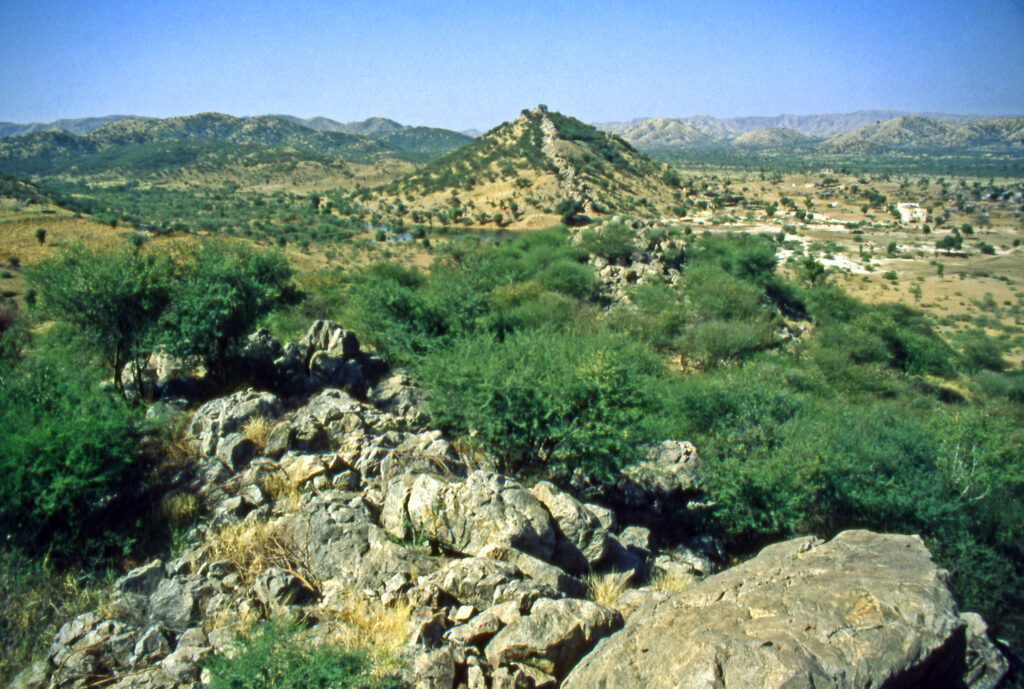
Natural Resources

Natural Resources are an essential component of sustainable development, security of supply, and the stability of the national economic system. The Institute studies the geodynamic, magmatic, metamorphic, sedimentary, hydrothermal, hydrological, and hydrogeological processes that control the genesis, evolution, and distribution of mineral, energy, and water resources. Activities include the geological, mineralogical, and geochemical analysis of metallogenic systems, the geochemical-isotopic characterization of fluids, the modeling and conceptualization of aquifers and geothermal systems, as well as the quantitative assessment of the potential of critical raw materials and subsurface energy resources. The integration of field observations, geophysical data, laboratory analysis, and analog and numerical modeling enables the development of predictive models for the exploration and sustainable management of resources.
In this context, scientific research becomes a strategic lever for strengthening energy security, the resilience and diversification of critical raw material supply chains, and the consolidation of industrial value chains. Knowledge and sustainable management of water resources—an essential resource for communities and ecosystems—are a key priority, in a context where challenges related to resources and their distribution take on a global dimension. The Institute operates with an international perspective, contributing advanced expertise to the understanding and management of natural resources on a global scale.
In questo ambito, la ricerca scientifica diventa leva strategica per rafforzare la sicurezza energetica, la resilienza e la diversificazione delle filiere delle materie prime critiche e il consolidamento delle catene del valore industriali. La conoscenza e la gestione sostenibile della risorsa idrica — bene essenziale per le comunità e gli ecosistemi — rappresentano una priorità centrale, in un contesto in cui le sfide legate alle risorse e alla loro distribuzione assumono una dimensione globale. L’Istituto opera infatti in una prospettiva internazionale, contribuendo con competenze avanzate alla comprensione e alla gestione delle risorse naturali su scala planetaria.

Climate Resilience
Climate Resilience concerns the capacity of natural systems, territories, and human communities to counteract and simultaneously adapt to ongoing environmental transformations, in a context of climate change that alters geological, hydrological, atmospheric, and biogeochemical balances. The Institute studies the interactions between the geosphere, hydrosphere, biosphere, and atmosphere, analyzing the flows of matter and energy that regulate biogeochemical cycles and the response of natural systems to climate change. Particular attention is paid to the Critical Zone, the dynamic interface between rock, soil, water, air, and living organisms, where the processes that sustain life and determine the vulnerability and adaptive capacity of territories are concentrated.
Within this framework, one of the Institute's defining activities is the development and evaluation of geoengineering solutions to be integrated into global climate change mitigation strategies, with particular reference to the geological sequestration and permanent mineralization of CO₂ (Carbon Capture and Storage, CCS). The analysis of fluid-rock interaction processes, the geochemical and isotopic characterization of natural systems, and the modeling of reactive processes in the subsurface allow us to assess the feasibility, safety, and long-term effectiveness of storage technologies. These activities are integrated with the study of groundwater dynamics, weathering and pedogenesis processes, and the carbon cycle, through field observations, advanced isotopic analyses, remote sensing, and coupled hydrogeological and geochemical modeling.
At the same time, the processes governing tectonics, fluid circulation, and gravitational instability in diverse geological contexts are investigated through geological and thematic mapping, multi-parameter monitoring, and numerical modeling of natural processes. The production of high-resolution geological data, the mapping of geochemical anomalies, the reconstruction of the return periods of natural events, and the simulation of evolutionary scenarios provide quantitative bases for land-use planning, prevention, and management of environmental criticalities, including in relation to the amplification of the effects induced by climate change.

Fundamental Research
Fundamental Research constitutes the cognitive infrastructure underpinning the understanding, management, and sustainable transformation of the Earth System. It is inspired by the principle of "Science for Knowledge," that is, research driven by the need to understand natural processes in their complexity, independently of immediate applications, but with the understanding that such knowledge is the basis for all future innovation. The Institute investigates the physical and chemical processes that regulate the evolution of the crust and mantle, deformation at plate boundaries, the formation of rocks and minerals, fluid circulation, planetary dynamics, and the interactions between the geosphere, hydrosphere, and biosphere, across timescales ranging from the present to deep geological time.
Scientific activity integrates advanced geochronology, isotopic geochemistry, mineralogy, experimental petrology, geophysics, geological and thematic cartography, Earth observation, and multiscale numerical modeling. The integration of field observations, high-resolution microanalytical analyses, characterization of natural fluids, and analog and numerical simulations allows us to reconstruct the physical and chemical conditions of natural systems, develop new interpretative models, and improve the predictive capacity of geological and environmental processes.
Fundamental research is not separate from applications, but represents their essential prerequisite: it fuels innovation in the fields of natural resources and climate resilience, ensuring the scientific soundness and reliability of models. At the same time, the Institute promotes research that is not limited to incremental progress, but aims for transformative results and the discovery of new interpretative paradigms, exploring still little-known domains, materials, and processes of the Earth System.
Investing in fundamental research means strengthening the country and the international community's ability to understand the planet, anticipate its transformations, and generate knowledge capable of producing radical innovations and solutions based on solid and shared scientific evidence.