
The laboratory is hosted in the IGG headquarter of Florence
Micropaleontological analysis of different fossil groups in sedimentary rocks provides information on geological and paleoclimatic phenomena, through biostratigraphy and paleoecology. Biostratigraphy uses signals related to the evolution of organisms (appearance, disappearance and acme), whereas paleoecology is based on analysing those organisms that more sensitive to environmental parameters. The occurrence of indicative species as proxies of temperature, salinity, depth, concentration of nutrients, etc., allows for determining the characteristics of the environment in which the organisms lived and where the rock sedimented.
The Laboratory
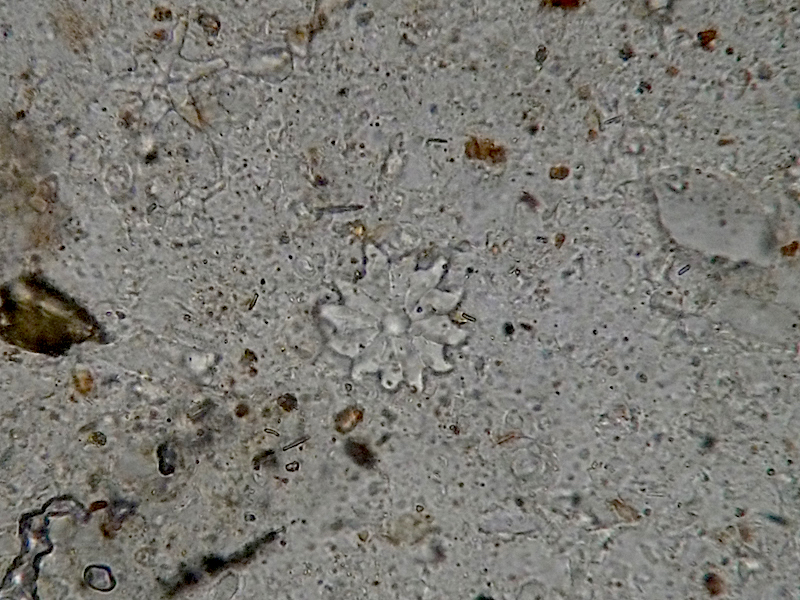
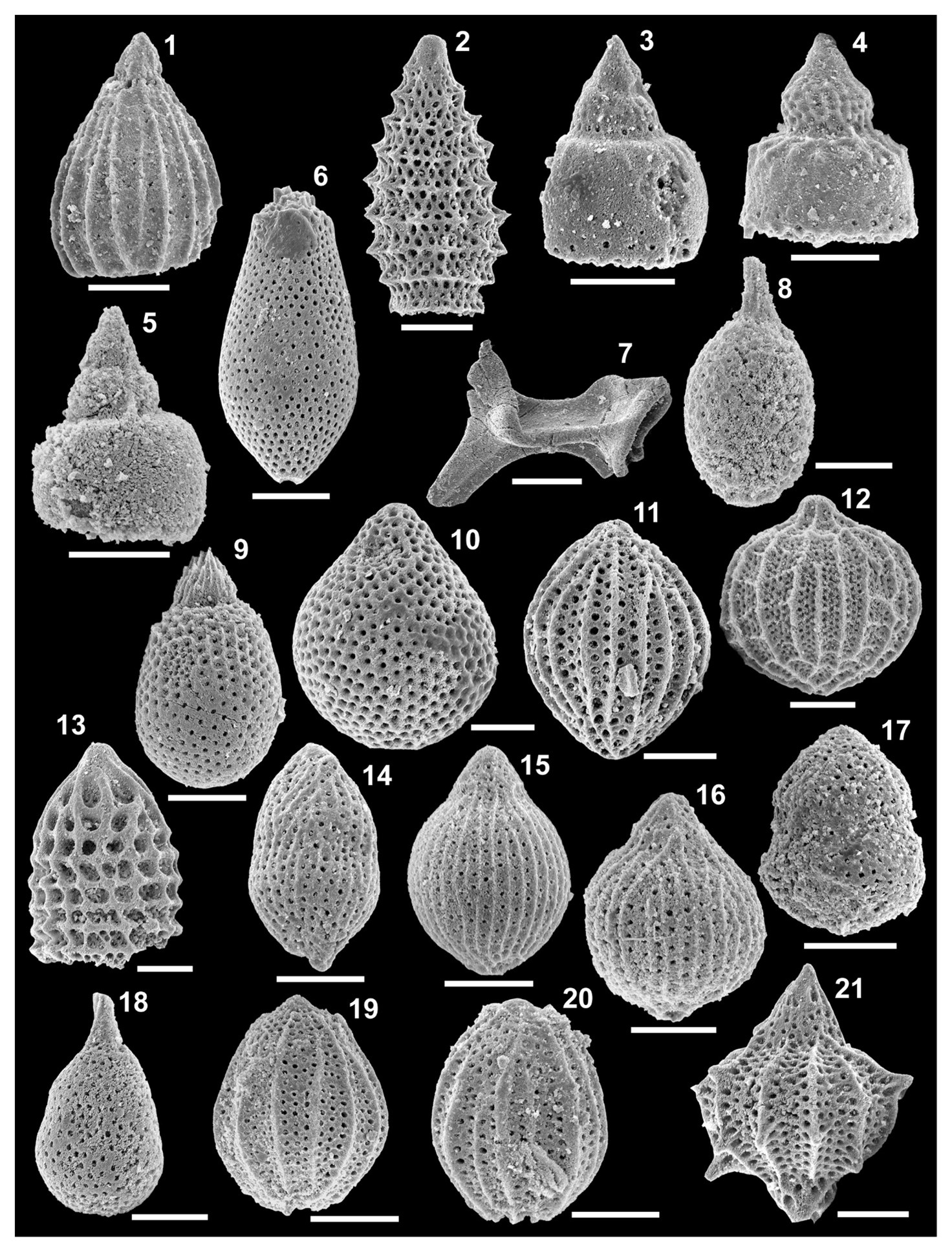
Radiolarians are planktonic protozoans that live in all oceans, both in surface and deep waters. Their shells, made of amorphous silica (opal), range in size from 30 microns to 2 mm. Radiolarians, whose opal skeleton transforms to quartz during diagenesis, are found in various types of carbonate and siliceous sedimentary rocks and are used for biostratigraphic and paleoceanographic studies and geodynamic reconstructions.
To study these microfossils, it is necessary to treat the carbonate rocks with hydrochloric acid (HCl); siliceous rocks (especially jasper) are treated with hydrofluoric acid (HF). The resulting residues are observed under an optical microscope, and the isolated radiolarians are subsequently examined and photographed under a scanning electron microscope (SEM).

Instruments
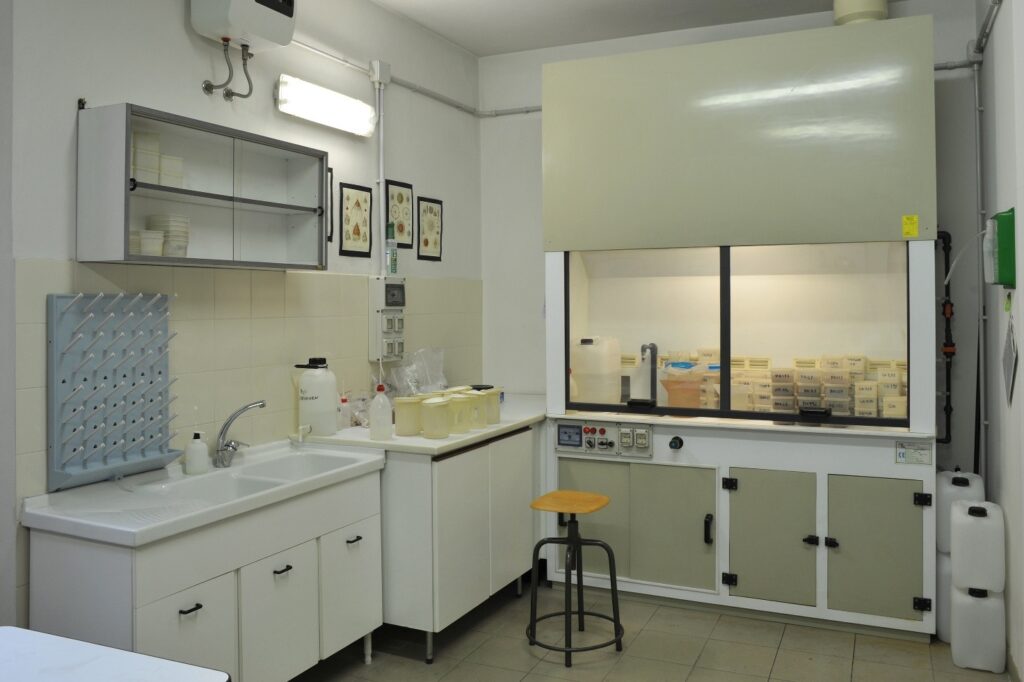
Sample preparation laboratory:
- BEAL hood for sample treatment with HCL and HF.
- ECOCELL laboratory oven for drying residues.
Sample analysis:
- EICA MZ12.5 microscope with 1x planapo objective
- LEICA MZ8 microscope with 1.6x planapo objective
- LEICA M3c microscope with 1.5x planapo objective
- OLYMPUS BX51 Microscope with PlanFL Objectives


Scientific Projects and Interests
Research projects currently underway:
- Integrated stratigraphy of Jurassic and Cretaceous sequences in the Southern Alps, Sicily, and of Cretaceous anoxic levels in the Umbrian-Marche Apennines.
- Biostratigraphy of ophiolite sedimentary covers in the Northern Apennines, Albania, Greece, and Iran.
- Biostratigraphy of the Jurassic continental sequences in the Dinaric-Hellenic belt (Albania and Greece).
- Taxonomic studies of radiolarians from the Middle-Upper Triassic, Jurassic and Cretaceous.
Staff and Contacts
Responsable:
- Marco Chiari, marco.chiari@igg.cnr.it
Contacts:
Phone: +39 0552757485
email: marco.chiari@igg.cnr.it
Publications
- Ferrari D., Chiari M., Pandeli E and Bachechi L. (2024). Radiolarian dating of cherts from Artofago Cave: Insights into prehistoric lithic tool production and resource exploitation in Southern Tuscany, Italy. Revue de Micropaléontologie,84: 100790.
- McCartain E., Orchard M.J., Mantle D., Haig D.W., Bertinelli A., Chiari M., Ferreira F.S., dos Santos Z., Backhouse J., Taylor B.A., Barros I.S., de Araujo B.N., de Araujo A., Boavida N., Peyrot D. and Rigo M. (2024). Applying integrated Triassic biostratigraphy in Timor-Leste to unlock an under sampled Gondwanan sector of the Tethys puzzle. Journal of Asian Earth Sciences,265: 106052.
- Chiari M., Saccani E., Prela M., Bortolotti V., Marcucci M. and Matsuoka A. (2023). Radiolarian biostratigraphy of the Northern Albania Ophiolithes: New data from the sub-ophiolitic mélange and eastern Mirdita ophiolithes. Ofioliti, 48 (2): 137-151. DOI: 10.4454/ofioliti.v48i2.566
- Barbero E., Pandolfi L., Delavari M., Dolati A., Saccani E., Catanzariti R., Luciani V., Chiari M. and Marroni M. (2021). The western Durkan Complex (Makran Accretionary Prism): Late Cretaceous tectonically disrupted seamounts chain and its role in controlling deformation style. Geoscience Frontiers,.12 (3): 101106.
- Rigo M., Onoue T., Tanner L.H., Lucas S.G., Godfrey L., Katz M.E., Zaffani M., Grice K., Cesar J., Yamashita D., Maron M., Tackett L.S., Campbell H., Tateo F., Concheri G., Agnini C., Chiari M. and Bertinelli A. (2020). The Late Triassic Extinction at the Norian/Rhaetian boundary: Biotic evidence and geochemical signature Submitted to Earth-Science Reviews, 204: 103180.
- Matsuoka A., Li X., Chiari M., Bertinelli A. (2020). Radiolarian occurrences from the Jurassic–Cretaceous transition beds in the Maiolica Formation of the Bosso Valley section, Northern Apennines, central Italy. Cretaceous Research 114: 104500. DOI: 10.1016/j.cretres.2020.104500
- Du Y., Chiari M, Karádi V., Nicora A., Onoue T., Pálfy J., Roghi G., Tomimatsu Y. and Rigo M. (2020) The asynchronous extinction of conodonts: new constraints from Triassic-Jurassic boundary sections. Earth-Science Reviews, 203: 103176.
- Pirnia T., Saccani E., Torabi G., Chiari M., Goričan Š. and Barbero E. (2020). Cretaceous tectonic evolution of the Neo-Tethys in Central Iran: Evidence from petrology and age of the Nain-Ashin ophiolitic basalts. Geoscience Frontiers. 11 (1):57-81.
- Li X., Matsuoka A., Bertinelli A., Chiari M. and Wang C. (2020). Correlation of Early Cretaceous radiolarian assemblages from southern Tibet and Central Italy, Cretaceous Research, 105: 104046.
- Saccani E., Delavari M., Dolati A., Marroni M., Pandolfi L., Chiari M. and Barbero E. (2018). New insights into the geodynamics of Neo-Tethys in the Makran area: Evidence from age and petrology of ophiolites from the Coloured Mélange Complex (SE Iran). Gondwana Research, Gondwana Research, 62: 306-327.
- Nirta G., Moratti G., Piccardi L., Montanari D., Carras N., Catanzariti R., Chiari M. and Marta Marcucci (2018). From obduction to continental collision: new data from Central Greece. Geological Magazine, 155 (2): 377-421.
- Bortolotti V., Chiari M., Göncüoglu M.C., Principi G., Saccani E., Tekin U.K. and Tassinari R. (2018). The Jurassic-Early Cretaceous basalt-chert association in the ophiolites of the Ankara Mélange east of Ankara, Turkey: age and geochemistry. Geological Magazine, 155 (2): 451-478.
- Saccani E., Chiari M., Bortolotti V., Photiades A. and Principi G. (2015). Geochemistry of volcanic and subvolcanic rocks and biostratigraphy on radiolarian cherts from the Almopias ophiolites and Paikon unit (Western Vardar, Greece). Ofioliti, 40 (1): 1-25.
- Gomez B., Giusberti L., Roghi G., Chiari M., Daviero-Gomez V. and Ewin T. (2015). Cretaceous conifers and angiosperms from the Bonarelli Level; Reassessment of Massalongo’s plant fossil collections of Monte Colle, Lessini Mountains, northern Italy. Cretaceous Researches,52: 179-193.
- Muttoni G., Tartarotti P., Chiari M., Marieni C., Rodelli D., Dallanave E. and Kirscher U. (2015). Paleolatitudes of Late Triassic radiolarian cherts from Argolis, Greece: insights on the paleogeography of the western Tethys. Palaeogeography, Palaeoclimatology, Palaeoecology, 417: 476–490