
The laboratory is housed in the IGG headquarters in Florence
The Laboratory
Fission-track analysis is currently a fundamental tool in low-temperature thermochronology for understanding the timing and rates of processes affecting the surface and middle crust. It is currently applied to the study of relief evolution, tectonic geomorphology, the timing and rates of mountain building and the activity of tectonic lineaments, hydrocarbon exploration, the reconstruction of the history of sedimentary basins and their inversion, and much more.
Fission track age is a radiometric dating method based on the spontaneous fission of U-238, which causes linear damage in the mineral lattice. However, this damage is thermally unstable: above a certain temperature, it heals partially or completely (annealing). A fission track age is therefore a cooling age. It measures the time elapsed since the mineral cooled below a certain temperature before the fission tracks became stable. Annealing causes the length of the tracks to shorten. In apatite, combining age determinations with track length measurements provides information on the thermal history of the minerals. Programs have been developed to reconstruct thermal histories.
In the IGG-CNR fission track laboratory, both apatite and zircon are analyzed. Furthermore, single grains of these minerals are selected, measured, and prepared for (U-Th)/He.ment (VRE) analyses, where the scientific data and metadata produced in the laboratory can be shared, according to the FAIR philosophy.
Instruments
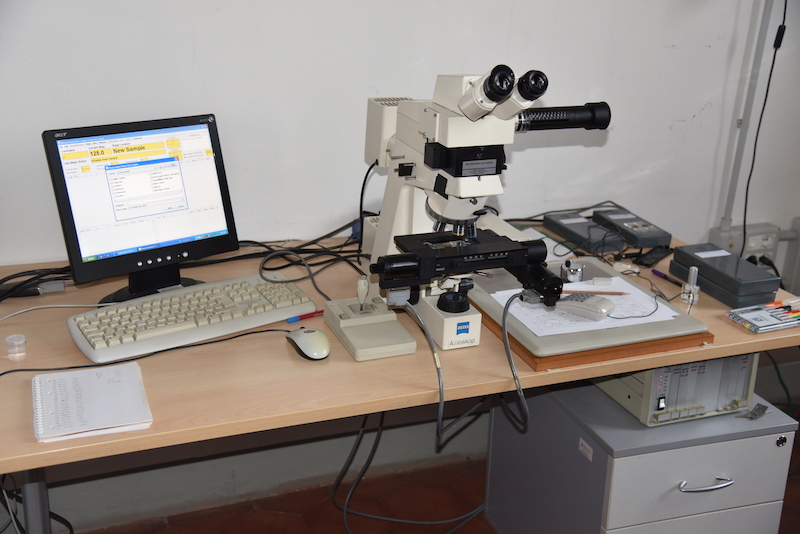
- For counting and measuring the tracks, a Zeiss Axioskop microscope with transmitted and reflected light equipped with an automatic moving stage, camera lucida and high-resolution digital tablet is used.
- For counting and measuring tracks and Dpars, the FT stage 4.0 software developed by Trevor Dumitru is used.
- The programs HeFTy (Ketcham et al., 2005) and QT-Qt (Gallagher, et al., 2005) are used for thermal history modeling.
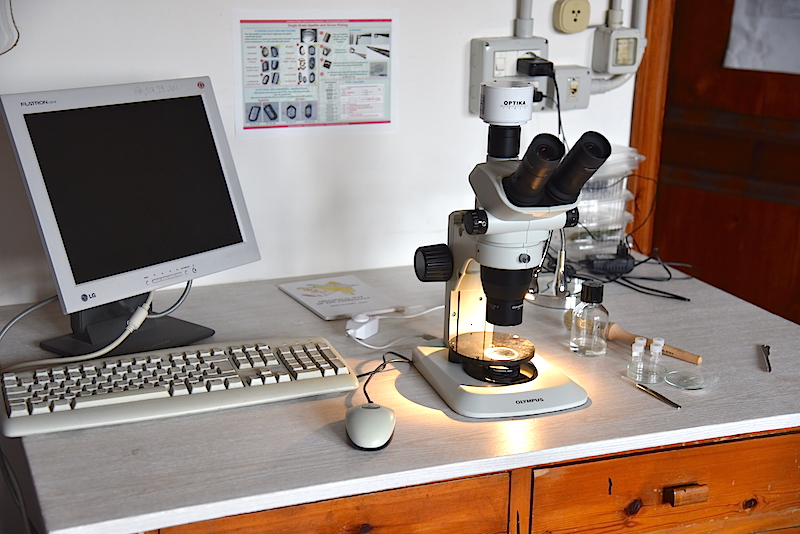
Additionally, the fission track laboratory houses an Olympus SZ61 stereomicroscope, primarily used for grain sorting for (U-Th)/He analyses. This microscope is equipped with a camera (which can also be used with the Zeiss microscope).
The IGG has all the necessary facilities for complete FT analysis. There is a laboratory dedicated to the separation and concentration of apatite and zircon from the rock, and equipment for mounting, polishing, polishing, and chemical etching of minerals.
Staff and Contacts
The laboratory staff is composed of:
- Dr. Maria Laura Balestrieri (Laboratory Manager)
Contacts:
Phones
- +39 055 2757531 (laboratory)
email:
- marialaura.balestrieri@igg.cnr.it
Methods and Applications
Fission tracks are linear damage within the crystal lattice of minerals due to the spontaneous fission of U-238. Spontaneous fission of U-238 occurs at a given rate described by the decay constant. This means that when the uranium concentration in a sample is known, the density of spontaneous tracks (ρs = number of tracks/cm2) in that sample provides the age of the sample.
ρs is determined by counting the tracks with a light microscope (at 1250x magnification).
The uranium content is measured by irradiating the samples with thermal neutrons in a reactor. The neutrons induce the fission of U-235 present in the sample. The density of induced tracks (ρi) provides a measure of the U-235 concentration in the sample.
Since the 235U/238U ratio is a constant in nature, the 238U content is obtained and the age of the sample can be calculated. The IGG fission track laboratory collaborates with the Triga Mark II reactor at LENA, University of Pavia, for irradiation.
Scientific Projects and Interests
Project:
In recent years, the IGG fission track laboratory has been involved in many national scientific projects funded by the Ministry of Education, University and Research (MIUR) and the National Antarctic Research Program. In 2008, it participated as the Italian Principal Investigator in the EUROCORES THERMOEUROPE project: Coupled climatic/tectonic forcing of European topography revealed through thermochronometry.
Scientific interests:
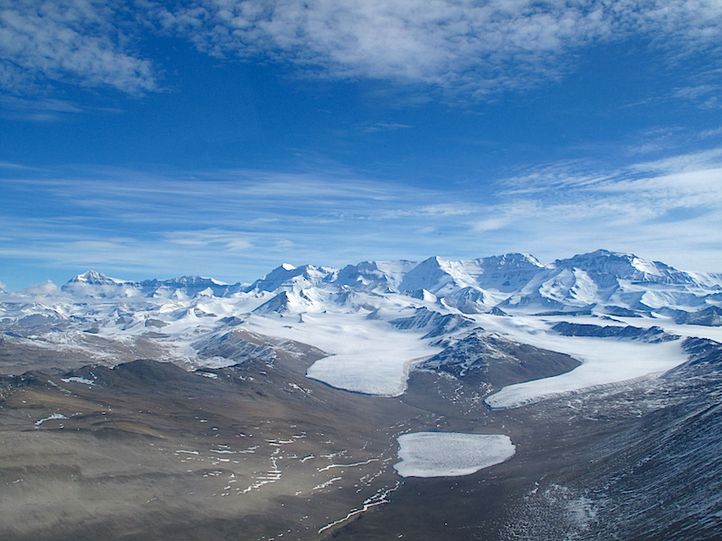
Studying the geodynamic and tectonic evolution of extensional environments (Nubian Margin, Ethiopian Rift, Transantarctic Range) and convergent environments (Alps, Northern Apennines, Eastern Sicilian Thrust Belt) through the application of low-temperature thermochronology methods. These methods allow for the quantification of exhumation and denudation rates in time and space and provide information and constraints on geomorphological evolution, thus also improving our understanding of the interactions between climate and tectonics.

Publications
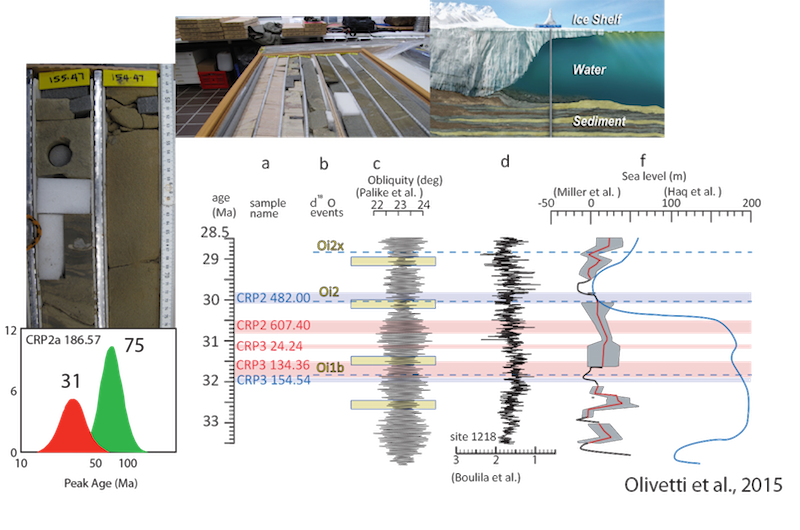
- Olivetti V., Balestrieri M.L., Rossetti F., Thomson S., Talarico F.M., Zattin M. (2015). Evidence of a full West Antarctic Ice Sheet back to the early Oligocene: insight from double dating of detrital apatites in Ross Sea sediments. Terra Nova, 27, 238–246.
- Remitti F., Balestrieri M.L., Bettelli G., Vannucchi P. (2013). Early exhumation of underthrust units near the toe of an ancient erosive subduction zone: A case study from the Northern Apennines of Italy. GSA Bullettin, 125, 1820-1832.
- Olivetti V., Balestrieri M.L., Rossetti F., Talarico F.M. (2013). Tectonic and climatic signals from apatite detrital fission-track analysis of the Cape Robert Project core records, south Victoria Land, Antarctica. Tectonophysics, 594, 80–90.
- Balestrieri M.L., Benvenuti M., Tangocci, F. (2013). Detrital fission-track-compositional signature of an orogenic chain-hinterland basin system: The case of the late Neogene Quaternary Valdelsa basin (Northern Apennines, Italy). Sedimentary Geology, 289, 159–168.
- Vignaroli G., Minelli L., Rossetti F., Balestrieri M.L., Faccenna C. (2012). Miocene thrusting in the eastern Sila Massif: Implication for the evolution of the Calabria-Peloritani orogenic wedge (southern Italy). Tectonophysics, 538–540, 105–119. doi:10.1016/j.tecto.2012.03.011
- Malusà M.G. and Balestrieri M.L. (2012). Burial and exhumation across the Alps–Apennines junction zone constrained by fission-track analysis on modern river sands. Terra Nova, 24, 221-226.
- Balestrieri M.L. , Bigazzi G., Pandeli E., Bigazzi G., Carosi R., Montomoli C. (2011). Age and temperature constraints on metamorphism and exhumation of the syn-orogenic metamorphic complexes of Northern Apennines, Italy. Tectonophysics, 509, 254-271.
- Folco L., Bigazzi G., D’Orazio M., Balestrieri M.L. (2011). Fission track age of Transantarctic Mountain microtektites. Geochimica et Cosmochimica Acta, 75, 2356-2360.
- Abebe T., Balestrieri M.L., Bigazzi G., (2010). The Central Main Ethiopian Rift younger than 8 Ma: confirmation through Apatite fission-track thermochronology. Terra Nova, 22, 470-476. doi: 10.1111/j.1365-3121.2010.00968.x.
- Olivetti V., Balestrieri M.L., Faccenna C., Stuart F. M., Vignaroli G. (2010). Middle Miocene out-of-sequence thrusting and successive exhumation in the Peloritani Mts, Sicily: late stage evolution of an orogen unraveled by apatite fission-track and (U-Th)/He thermochronometry. Tectonics, accepted. Tectonics, 29, TC5005, doi:10.1029/2009TC002659.
- Thomson S. N., Brandon M.T., Reiners P.W., Zattin M., Isaacson P.J., Balestrieri M.L., (2010). Thermochronologic evidence for orogen-parallel variability in wedge kinematics during extending convergent orogenesis of the northern Apennines, Italy, Geological Society of America Bulletin 2010;122;1160-1179; doi: 10.1130/B26573.1
- Corrado S., Aldega L., Balestrieri M.L., Maniscalco R., Grasso M. (2009). Structural evolution of the sedimentary accretionary wedge of the alpine system in Eastern Sicily: thermal and thermochronological constraints. Geological Society of America Bulletin, 121, 1475-1490. doi:10.1130/B26420.1
- Ketcham R. A., Donelick R.A., Balestrieri M.L., Zattin M. (2009). Reproducibility of apatite fission-track length data and thermal history reconstruction. Earth and Planetary Science Letters, 284, 504-515. doi: 10.1016/j.epsl.2009.05.015.
- Bernet M., Brandon M., Garver J., Balestrieri M.L., Ventura B., Zattin M. (2009). Exhuming the Alps through time: Clues from detrital zircon fission-track thermochronology. Basin Research, 21, 781-798. doi: 10.1111/j.1365-2117.2009.00400.x
- Balestrieri M.L., Abbate E., Bigazzi G. and Omer (2009). Thermochronological data from Sudan in the frame of the denudational history of the Nubian Red Sea margin. Earth Surface Processes and Landforms, 34, 9, 1279-1290.
- Balestrieri M.L., Moratti G., Bigazzi G. and Algouti A. (2009). Neogene exhumation of the Marrakech High Atlas (Morocco) recorded by apatite fission-track analysis. Terra nova, 21,75-82, doi: 10.1111/j.1365-3121.2008.00857.x.
- Storti F., Balestrieri M.L., Balsamo F., and Rossetti F. (2008). Structural and thermochronological constraints to the evolution of the West Antarctic Rift System in central Victoria Land. Tectonics, 27, TC4012, doi:10.1029/2006TC002066.
- Balestrieri M.L., Stuart F.M., Persano C., Abbate E. and Bigazzi G. (2005). Geomorphic developmentof the escarpment of the Eritrean margin, southern Red sea, from combined apatite fission-track and (U-Th)/He thermochronometry. Earth and Planetary Science Letters, 231, 97-110.
- Bigazzi G., Balestrieri M.L., Norelli P. and Oddone M. (2004). Fission-track dating of a tephra layer in the Alat Formation of the Dandero Group (Danakil Depression, Eritrea). Rivista Italiana di Paleontologia e Stratigrafia, 110, 3-4.
- Abbate E., Balestrieri M.L., and Bigazzi G. (2002). Morphostructural development of the Eritrean rift flank (southern Red Sea) inferred from apatite fission-track analysis. Journal of Geophysical Research, 107, B11,doi: 10.1029/2001JB001009, pp.1-12.